What this page helps you decide
Start the next session with a plan
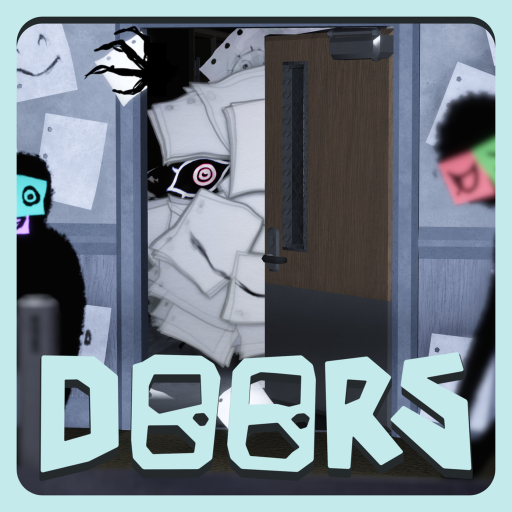
DOORS is a masterclass in tension and environmental audio cues. Players progress through a randomly generated 100-room hotel, searching drawers for keys, coins, and survival tools (Flashlights, Lighters, Lockpicks, Vitamins, Crucifix) while evading lethal entities that possess distinct visual and acoustic behaviors.
Reader outcome
Learn the next entity counter and pre-spot hiding options before spending Knobs or starting a deeper run.
- Genre
- Escape
- Active code rows
- 6
- Creator
- LSPLASH
Player decisions and reward planning for DOORS
Atmospheric co-op survival horror navigating 100 sequential hotel doors filled with terrifying entities, puzzles, and auditory cues.
Surviving DOORS requires intimate familiarity with entity sound design and hiding mechanics. When lights flicker, players must immediately assess the room layout: Rush leaves only a moment to duck into a wardrobe or under a bed, while Ambush will rebound through the room multiple times, requiring players to exit and re-enter closets between passes to prevent the 'Hide' monster from expelling them. The Library (Door 50) and Electrical Room (Door 100) feature the blind but acoustically sensitive 'Figure', requiring crouch-walking, heartbeat minigame mastery, and circuit puzzle solving.
Before spending DOORS rewards
Codes in DOORS grant Knobs (in-game currency used at the Pre-Run Shop) and free Revives. Spend Knobs on a Lockpick and Vitamins before entering a serious run. A Lockpick skips tedious drawer searches in dark rooms, while Vitamins provide vital movement speed to evade Seek and outrun Figure during chase sequences.
Core Priorities & Essentials
- Wear headphones: 90% of survival in DOORS relies on directional audio cues (Screech's 'Psst', Rush's rumble, Dupe's faint growl).
- Save the Crucifix for emergency encounters like Ambush, Door 100 Figure, or Greenhouse Rush.
- Never camp inside closets prematurely; the 'Hide' entity will damage and forcefully eject you after roughly 5 seconds.
Critical Mistakes to Avoid
- ✕Sprinting through Door 50 or Door 100, which instantly alerts Figure to your exact coordinates.
- ✕Staring at Eyes: keep your camera tilted downward to avoid rapid sanity and health drain.
Plan your next session
- Step 1:Doors 1 - 49: Move methodically, gather gold from every drawer, and always identify the nearest closet upon entering a new room.
- Step 2:Door 50 (The Library): Crouch at all times. Collect all 8 books while listening for Figure's heavy footsteps, and solve the 5-digit padlock code.
- Step 3:Doors 51 - 99: Beware of Greenhouse dark rooms where flickering lights do not occur; listen purely for Rush's audio roar and Snare traps on the floor.
- Step 4:Door 100: Activate the breaker switches, complete the breaker memory puzzle, and sprint directly to the elevator with Vitamin boost.
Frequently Asked Questions about DOORS
How do you escape Ambush in DOORS?▼
When Ambush attacks, hide in a closet until he passes, then immediately step out for 1 second to reset the 'Hide' timer, and jump back in before his return rebound. Repeat this 2 to 6 times until his screech fades.
What does the Crucifix do in DOORS?▼
Equipping and holding the Crucifix creates a holy seal that chains and banishes most entities (like Rush, Ambush, Screech, Seek, and Eyes) when they attempt to attack you.
RBXCodes Editorial Desk
PublisherSource review & player-guide editing
Review scope: RBXCodes checks named source URLs, reward text, lifecycle status, and game-specific guidance for DOORS. A source check does not prove that a code redeems.
Source review: We record the named public source and its last check date. Third-party sightings stay labeled Source-listed · Check in game.
Verification boundary: Only an official source or an explicitly recorded in-game result receives a stronger evidence label.
Account safety: We never ask for passwords, cookies, downloads, or payment. Redeem codes only inside Roblox.
Corrections: Found an expired code, incorrect reward, or missing source? Contact the editorial desk at rbxcodehub@gmail.com.
Code evidence, not a promise
Check the reward before you plan around it
RBXCodes keeps the full code table separate so the status, reward, source, and expired history remain easy to scan. An “active” row means the source still lists it at the recorded check time; only a successful redemption inside the game proves it works for your account and server.
BIJUUMIKE
5 Knobs
Source checked Sep 19, 2026
FINDTHETROLLFACES
5 Knobs
Source checked Sep 19, 2026
KREEKCRAFT
5 Knobs
Source checked Sep 19, 2026
KUBZSCOUTS
5 Knobs
Source checked Sep 19, 2026
Demand context
Before you trade or spend in DOORS
Manual DOORS value context for limited cosmetics, revive convenience, floor-update risk, and safer spending before a multiplayer run.
Primary trade driver
Run convenience
DOORS value is strongest when a reward or cosmetic improves multiplayer run comfort, revive planning, or party readability instead of only looking rare.
Risk signal
Floor update spikes
New floors and entities can reprice cosmetics and convenience items overnight until players learn the real route value.
Best use
Run planning
Use this page before spending Robux or code rewards on a cosmetic that does not help your usual floor route.
Player demand
Medium
DOORS still draws regular US search and code intent, so manual W/F/L context helps more than a generated snapshot alone.
- Check whether a reward helps death recovery or party play, not only looks.
- Do not overpay for cosmetics during the first week of a floor update.
- Use codes when you are about to start a full run with friends.
- Treat limiteds as volatile until supply settles.
- Recheck demand after major floor, entity, or shop updates.
Demand scores are editorial context from a dated snapshot, not a guaranteed item price or promise that another player will accept a trade.